Mid-size
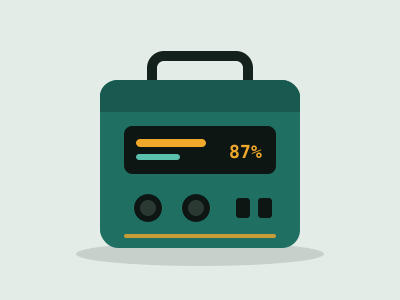
EcoFlow Delta 2
- Capacity
- 1,024 Wh
- Output
- 1,800 W
Fast wall charging and expandable from 1 to 3 kWh. Handles most household appliances at once.
Check price at EcoFlowA portable power station is a large rechargeable battery with outlets. In an outage it can keep a fridge, router, phones and lights running without fuel or fumes. This guide explains how to choose one and compares three models using published specs and reviewer findings. We have not tested these units hands-on.
Fast wall charging and expandable from 1 to 3 kWh. Handles most household appliances at once.
Check price at EcoFlow
LiFePO4 cells aimed at long service life. A common choice for fridge, router and phone backup.
Check price at Jackery
Large capacity for multi-day outages or heavier loads. Heavy and a bigger purchase.
Check price at AnkerWatt-hours tell you how much energy is stored. Add up the watts of what you want to run, multiply by the hours, and add about 15% for inverter loss. The runtime calculator does this for you.
The inverter rating must be higher than the combined draw of everything running together. A refrigerator needs extra power for a moment when its compressor starts, so leave headroom.
Reviewers often point to LiFePO4 batteries for outage backup because of their long cycle life. Check the chemistry on the spec sheet before you buy.
Look at how fast it charges from the wall and the maximum solar input it accepts. Solar input lets a power station keep going through a long outage if you have panels.
Battery power stations produce no exhaust and are designed for indoor use. Gas generators are not. Never run a gas generator inside a home or garage, or near open windows.
| Model | Capacity | Output | Suits |
|---|---|---|---|
| EcoFlow Delta 2 | 1,024 Wh | 1,800 W | A first power station for fridge, router and devices. Expandable from 1 to 3 kWh. |
| Jackery Explorer 1000 V2 | 1,070 Wh | 1,500 W | Fridge, router and phone backup with a long-life battery. |
| Anker SOLIX F3800 | 3,840 Wh | 6,000 W | Multi-day outages or heavier loads. |
A fridge, Wi-Fi router, phone and laptop charging and a few LED lights come to roughly 1,950 Wh per day in our calculator's example, or about 2,240 Wh with inverter loss. On that load a 1 kWh unit lasts around 11 hours and a 3.8 kWh unit lasts around a day and a half. Your numbers will differ, so enter your own appliances in the calculator.
Gas generators usually have a higher continuous output, which makes them better suited to running a whole home. They are noisy, need fuel and maintenance, and must stay outdoors. Power stations are quiet and indoor-safe, which suits essentials like a fridge, internet and medical devices. Many households choose a power station for essentials and add a transfer switch or larger system only if they need whole-home backup.
Most cannot. Larger systems with a transfer switch can back up selected circuits or the whole home, but they cost more and need installation by a licensed electrician.
Divide the battery's watt-hours by your load in watts, then reduce by about 15% for losses. The calculator does this for you.
Many models accept solar input. Check the maximum solar input listed for the specific model and match your panels to it.
Talk to your clinician and the equipment maker about a backup plan. A power station may suit devices like a CPAP machine, but check the device's power needs first.
Some links on this page are affiliate links. If you buy through them we may earn a commission at no extra cost to you. See our disclosure page for how that works.